Friday, March 4, 2011
Windows iPad Alternative – Microsoft Hit Tablet PC Market
2:05 AM
 Windows iPad Alternative – Microsoft Hit Tablet PC Market. The Tablet PC business field has a big surprise when HP announce their Windows 7 Powered tablet PC, Slate 500 Tablet. Many are asking if the world’s largest software maker would make its entry to the mobile gadgets, particularly in the tablet pc market, that has no sign of decline in popularity. Though other tablet pc makers make use of Windows as their device’ OS, like the Slate 500 from Hewlett Packard, it still imperative for Microsoft to make its way for a tablet device. Earlier this year we caught sight of what appeared to be a page from HP’s internal pre-launch presentation for its forthcoming Slate touchscreen tablets.
You May interesting in our related post :
- Most Wanted Best Cheapest Tablet 2011 You Should Know
- Most Wanted Windows Phone 7 Series Differences Today
- Top Best Tablet 2011 (iPad Alternative) Must Have
- Top Best Most Wanted Processor For Your Budget
- Samsung Galaxy Tab Best Choice Ipad Alternative
The Tablet PC business field has a big surprise when HP announce their Windows 7 Powered tablet PC, Slate 500 Tablet. The surprising factor is the Windows 7 Professional operating system (OS) since usually a tablet PC utilize the cell phone operating system (OS) such as iPhone OS, Android, or Windows Phone 7 (WP 7). It is needed to utilize the cell phone OS instead the PC OS since the tablet PC is a mobile device which usually has lower specification if compare with the usual PC/Laptop.
Now some of those specs have been confirmed, including the model number of the first series – the Slate 500 (it’s actually the Slate 500-1002tu, if you want to get pedantic).
HP has launched the "Slate 500," tablet device that will compete with the Apple iPad, Cisco Cius, Samsung Galaxy Tab and RIM Playbook as it looks to win hearts in the increasingly crowded enterprise segment. HP says that the tablet is designed specifically for users looking for "the familiarity of Microsoft Windows 7 and the ability to run custom or corporate applications".
Windows iPad Alternative – Microsoft Hit Tablet PC Market
Windows Powered HP Slate 500 as Apple achieved tremendous success with its iPad, wouldn’t Microsoft makes its Windows iPad alternative to counter the increasing market share of one of its toughest rival when it comes to OS? Not to mention, Google, another software giant has also proved how it can penetrate the mobile industry through the introduction of their Android OS few years back. The battle for mobile devices’ share is currently dominated by Apple and Google Android powered devices.

A premature post on HP’s own site identifies the HP Slate 500 as running Windows 7 Home Premium, with an 8.9 inch screen and a stylus that can be used “to write or draw as if on a piece of paper.”
The device also sports “two cameras (video and still)” while “exclusive HP software gives you access to photos, videos and everything on the Internet with just a touch”.
This sounds to us like a quick-start pre-Windows environment. That could be either HP’s existing proprietary QuickWeb environment or the lightweight Linux-based HyperSpace operating system developed by BIOS maker Phoenix Technologies, which HP purchased last month.

Additionally, a listing for the Slate 500 on the US EnergyStar site pegs the device as running a single-core 1.6GHz processor, which matches earlier leaked specs pointing to an Atom chip. The base model will also be fitted with 1GB of memory.
The rest of the specs remain a mystery but HP’s playbook suggested a 64GB flash drive and SD memory card slot, one USB 2.0 port and a ‘docking connector’ which carries power, audio and HDMI output along with support for additional USB ports.
For wireless, expect 802.11g and Bluetooth plus optional 3G (using a standard SIM card). HP pegged the device as hitting five hours of battery life between recharges and estimated the Slate 500’s starting price as US$549-599.

Recently, Microsoft came to the tech industry’s premier gadget show for presentation of their latest updates. Many expected Microsoft to unveil its flagship tablet PC. Instead, Microsoft presented other computer hardware, some stuff about microchips, and a sneak peak to yet another Windows.
If Microsoft will not make its bold move to enter the tablet device market, Apple as well as Google will certainly penetrate Microsoft’s OS share. You would not be surprised if someday Google will introduce their alternative OS though. Chrome just for example is a major success of Google outranking the Microsoft’s default browser, the Internet Explorer, with a big margin.
The specification of the Slate 500 includes: Intel Atom Z540 clocked at 1.86GHz, 2GB RAM, 64GB SSD plus Broadcom HD chip onboard to offload CPU from the task of decoding 1080p video.
The 8.9-inch capacitive screen can handle 1024x600 pixels, much like Galaxy Tab, and HP has judiciously thrown in a VGA webcam, a 3-megapixel camera and ability to use an active stylus from Wacom, turning the Slate 500 into a digitising tablet.


It'll be available on HP's site for $799 to anyone who wishes to purchase one.
[via engaget]
You May interesting in our related post :
Monday, February 28, 2011
Most Wanted Windows Phone 7 Series Differences Today
6:58 AM

One question we hear often is: What’s next for Windows Phone? We’re obsessive about listening closely to our customers and improving our phone software. So over the next few months, look for updates that add some new features you’ve asked for and also tune up your phone’s performance. We've got a serious hands on for you to check out, but here is everything that you need to know.
The name—Windows Phone 7 Series—is a mouthful, and unfortunately, the epitome of Microsoft's worst naming instincts, belying the simple fact that it's the most groundbreaking phone since the iPhone. It's the phone Microsoft should've made three years ago. In the same way that the Windows 7 desktop OS was nearly everything people hoped it would be, Windows Phone 7 is almost everything anyone could've dreamed of in a phone, let alone a Microsoft phone. It changes everything. Why? Now that Microsoft has filled in its gaping chasm of suck with a meaningful phone effort, the three most significant companies in desktop computing—Apple, Google and Microsoft—now stand to occupy the same positions in mobile. Phones are officially computers that happen to fit in your pocket.
Windows Phone 7 is also something completely new for Microsoft: A total break from the past. Windows Mobile isn't just dead, the body's been dumped, buried and paved over by a rainbow brick road.
The Interface
It's different. The face of Windows Phone 7 is not a rectangular grid of thumbnail-sized glossy-looking icons, arranged in a pattern of 4x4 or so, like basically every other phone. No, instead, an oversized set of bright, superflat squares fill the screen. The pop of the primary colors and exaggerated flatness produces a kind of cutting-edge crispness that feels both incredibly modern and playful. Text is big, and beautiful. The result is a feat no phone has performed before: Making the iPhone's interface feel staid.
 If you want to know what it feels like, the Zune HD provides a taste: Interface elements that run off the screen; beautiful, oversized text and graphics; flipping, panning, scrolling, zooming from screen to screen; broken hearts. Some people might think it's gratuitous, but I think it feels natural and just…fun. There's an incredible sense of joie de vivre that's just not in any other phone. It makes you wish that this was aesthetic direction all of Microsoft was going in. Another, sorta similar interface, in terms of data presentation, is this Android Slidescreen app, which gives you a bunch of info up top.

Windows Phone 7 is connected in the same sense as Palm's webOS and Android, with live, real-time data seamlessly integrated, though it's even smoother and more natural. Live tiles on the Start screen, which you can totally customize, are updated dynamically with fresh content, like weather, or if you've pinned a person to your Start screen, their latest status updates and photos.

The meat of the phone is organized around a set of hubs: People, Pictures, Games, Music + Video, Marketplace, and Office. They're kind of like uber-applications, in a sense. Massive panoramas with multiple screens that are each kind of like individual apps. People, for instance, isn't just your contacts, but it's also where social networking happens, with a real-time stream of updates pulled in from like Facebook and Windows Live. (No Twitter support announced yet, it appears—a kind of serious deficiency, but one we're sure will be remedied by ship date.)
As another example, Music + Video is essentially the entirety of Zune HD's software, tucked inside of Windows Phone 7. A piece of interface that's shockingly not there: A desktop syncing app. If anyone would be expected to tie their phone to a desktop, you'd think it'd be Microsoft, but they're actually moving forward here. All of your contacts and info sync over the air. The only thing you'll be syncing through your computer is music and videos, which is mercifully done via the Zune desktop client.

Hello, Connected World
The People hub might be the best social networking implementation yet on a phone: It's a single place to see all of your friends' status updates from multiple services in a single stream, and to update your own Facebook and Windows Live status. Needs. Twitter support. Badly. But you have neat things going on, like the aforementioned Live tiles—if you really like someone or want to stalk them hardcore, you can make them a tile on your Start screen, which will update in realtime with whatever they're posting, and pull down their photos from whatever service. There's also your very own profile page, where you can scan your current social state and post updates to multiple services simultaneously.
All of your contacts are synced and backed up over-the-air, Android and webOS style, and can be pulled from multiple sources, like Windows Live, Exchange, etc. Makes certain other phones seem a little antiquated with their out-of-the-box Contacts situation.
Faster apps and games
“Nobody likes to wait. That’s why we’ve whittled down the time it takes for apps and games to start up and resume. It’s all part of our focus on getting you to the things you love, easier and faster.”
Better Marketplace search
“We’ve streamlined Marketplace search to make it easier to find specific apps, games, or music. Press the Search button in the apps or games section of Marketplace and you’ll see only apps or games in the results.”
Holy Crap! The Zune Phone!
Microsoft's vision of Zune is finally clear with Windows Phone 7. It's an app, just like iPod is on the iPhone, though the Zune Marketplace is integrated with it into the music + video hub, not separated into its own little application. It's just like the Zune HD, so you can check out our review of that to see what it's like. But you get third-party stuff like Pandora, too, built-in here. Oh, and worth mentioning, there will be an FM radio in every phone (more on that in a bit).

Pictures is a little different though, and gets its very own hub. That's because it's intensely connected—you can share photos and video with social networks straight from the hub, and via the cloud, they're kept in sync with your PC and web galleries. The latest photos your friends post also show up here. Of course, you get around with multitouch zoom and zip-zip scrolling stuff.

Xbox, on a Phone
I'll admit, I very nearly needed to change my pants when I saw the Xbox tile on the phone for the first time. Obviously, you're not going to be playing Halo 3 on your smartphone (at least not this year), but yes, Xbox Live on a phone! It's tied to your Live profile, and there are achievements and gamer points for the games you can play on your phone, which will be tied to games back on your Xbox 360.
If Microsoft's got an ace-in-hole with Windows Phone 7, it's Xbox Live. Gamers have talked about a portable Xbox for years—this is the most logical way to do it. The N-Gage was ahead of its time. (Okay, and it sucked.) The DS and PSP are the past. The iPhone showed us that the future of mobile gaming was going to be on your phone, and now that just got a lot more interesting. The potential's there, and hopefully the games will be plentiful and awesome enough to meet it.

Browser and Email
Yes, the browser is Internet Explorer. And yes, the rumor's true: It won't be as fast as Mobile Safari. Not to start. But it's not bad! Hey, least it's got multitouch powers right out of the box. Naturally, you've got multiple browser windows, and you can pin web pages to the Start screen, like any other decent mobile browser.
The Outlook email app makes me question how people read email on a BlackBerry. It is stunning. I never thought I'd call a mail app "stunning," but, well, it kind of is. It's the best looking mobile mail app around. Text is huge. Gorgeous. Ultrareadable. Of course, it's got Exchange support too.

Apps, Office and Marketplace
Remember what I said earlier about Windows Mobile being dead? So are all the apps. They won't work on WP7. Sorry Windows Mobile developers, it's for the best. Deep down, we all knew a clean break was the only way Windows Phone wasn't going to suck total balls.
Apps will have some standardized interface elements, like the app bar on the bottom for common commands. But here's a question: Will they multitask? Um, that depends on your definition of multitasking! When we asked Joe Belfiore, the guy running Windows Phone, he alluded to live tiles and feeds as some ofthe ways that third-parties will be able to "bring value to the user, even when their apps aren't running." Which sounds to us like a big ol' "shnope," but we'll see more next month at Microsoft's developer event MIX.
The Marketplace is where you'll buy apps. Since we've got like 6 months 'til Windows Phone 7 launches and people should be excited to develop for it, hopefully there'll be plenty of stuff to buy there on day one.

Naturally, Bing and Bing Maps are built into the phone as the default search and maps services. They're nice, smartly contextual, and very location-oriented. Bing's also used for universal search on the phone, via a dedicated Bing button. (There is no search but Bing search, BTW.) Bing Maps is multitouchable, with pinch-to-zoom. It's rich, with built-in listings with reviews and clever ways of searching for stuff. And yeah, Office! It's connected to that cloud thing, for OTA syncing and such. Business people should be happy.
Hardware and Partner
Another way the old Windows Mobile is dead is how Microsoft's handling partners and hardware situation. With Windows Mobile, a phonemaker handed Microsoft their monies, and Microsoft tossed them a software kit, and that was that. Which is why a lot of Windows Mobile phones felt and ran like crap. And why it took HTC like two years to produce the HD2, the most genuinely usable rendition of Windows Mobile ever.
Microsoft's not building their own phones, but they're going to be picky, to say the least, with Windows Phone 7. Ballmer phrases it as "taking more accountability" for people's experiences. There's a strict set of minimum hardware requirements: a capacitive, multitouchable screen with at least four points of touch; accelerometer; 5-megapixel camera; FM radio; and the like. There are serious benchmarks that have to be met. And only chosen OEMs get to build the phones now, not like before, when anybody with $20 could get a license. The OEMs that Microsoft's announcing they're working with at launch are: Qualcomm, LG, Samsung, Garmin Asus, HTC, HP, Dell, Sony Ericsson, and Toshiba. AT&T's their "premiere partner" in the US (dammit). (Take note people! Premiere does not mean exclusive!)
Every phone will have a Bing (search) button and a Start button. Custom skins, like the minor miracles HTC worked, are now banned. The message to hardware makers is clear: It's a Windows Phone, you're just putting it together. Basically, phonemakers get to decide the shape of the phone, and whether or not there's a keyboard.
One other word on hardware, in a manner of speaking. Hardware it won't work with? Macs. Which is kind of stupid to us—a lot of the people Microsoft wants to use Windows Phone 7, like college students, have been going Mac in droves. You wanna lure them back Microsoft? Let them use your phone with any OS.

The Big Picture
Windows Phone 7 Series is, from what we've seen, exactly what Microsoft's phone should be. It's actually good. It brings together a bunch of different Microsoft services—Zune, Xbox, Bing—in a way that actually makes sense and just works. But there's a real, lingering question: Are they too late? The first Windows Phone 7 Series…phone—goddamn that is a stupid name—won't hit until the end of this year. That's more than three years after the iPhone, two years after Android, hell, even a year after Palm, the industry's sickly but persistent dwarf.

History is on Microsoft's side here—we know what happened the last time Apple had a massive head start. (Update: To be clear, in computing.) Microsoft is, if nothing else, incredibly patient. Remember the first Xbox? Back when it was crazy that Microsoft was getting into videogames? It's cost them about a billion dollars and taken nearly 10 years, but now, with Xbox Live, Project Natal and their massive software ecosystem, they arguably have the most impressive gaming console you can buy. That was a pet project. Now, mobile is the future of computing. What do you think Microsoft will sink into that?
The mobile picture is now officially a three-way dance: Apple, Google, and Microsoft. The same people who dominate desktop computing. Everybody else is screwed. Former Palm CEO Ed Colligan famously said a few years ago: "PC guys are not going to just figure this out. They're not going to just walk in." That's precisely what's just happened. Phones are the new PCs. PC guys are the new phone guys.
This action is pretty logical: Microsoft employees want Windows Phone 7 to succeed than the average outside developer, and so allowing employees to gain financially through their app development efforts is a big incentive to come up with interesting app ideas Windows Mobile for the next generation dubbed Windows Phone 7 Series upon its launch at MWC.
Sunday, February 27, 2011
Most Wanted Smartphone 2011 By Platform
5:47 AM


There isn’t a lot of choice when it comes to Apple operating systems so the iPhone 4 is the obvious current bet. The iPhone 4 features one of the highest resolution screens currently available on a smartphone, at 960×640, and it manages to fit it into a 3.5” display. The on-board camera can record HD video at 720P with it’s 5 megapixel camera. There are a couple of internal storage items (16GB and 32GB).
However, you might want to hold off until there is news of the iPhone 5. There has been a whisper that news is due in March 2011 (but don’t hold me to it!), Source: Sky News: iPhone 5 To Be Revealed 2 March. However, from that article the image associated with that particular announcement looks more like an iPad announcement.
What others say: Engadget: iPhone 4 review, “We’re not going to beat around the bush — in our approximation, the iPhone 4 is the best smartphone on the market right now”.

Recently picked up by HP the Palm is another one with not a lot of choice which is a shame as it has a great operating system. The current Palm Pre features a 3.1” screen with a resolution of just 320×480. The camera is a 3 megapixel and storage is 8GB. However, the Pre does have a slide out mini keyboard in its favour.
So, the Palm Pre is the one to watch – but you might consider holding off until the recently announced Palm Pre 3, featuring an all new version of webOS, is launched.
What I said: Initial thoughts on the Palm Pre, “The Pre is functional yet lacks that real WOW factor, my theory is that is probably because the App Catalog is so bereft of diverse applications – perhaps the firmware upgrade to 1.2 will open a new world for the Pre?”.
What others say: IT Pro: Palm Pre Review, “It’s slicker than using Symbian, arguably more pocketable than its top rivals the HTC Hero and iPhone and a valuable and valid alternative to the ever-expanding sea of Android phones we seem to be pelted with on a weekly basis these days”.

The BlackBerry Torch 9800 boasts the latest revision of RIM’s operating system. The Torch 9800 features a 3.2” screen (3.18” diagonally) with 480×360 pixels, similar to the Palm Pre. Talking of similarities to the Pre the Torch also boasts a slide-out mini keyboard. The onboard camera is 5 megapixel and storage is made up of 4GB inboard storage and a 4GB media card.
With the latest developments in the operating system the traditionally enterprise-centric BlackBerry range are starting to shine and could be one to watch.
What I said: A Look At The BlackBerry Torch 9800, “Overall the BlackBerry Torch 9800 is an attractive phone that is packed full of features. A little streamlining may be required on the user interface but all in all its a big step in the right direction.”.
What others say: CNET: BlackBerry Torch 9800 review, “There’s not much that the BlackBerry Torch 9800 can’t do, but it doesn’t make it easy. Pricey, chunky, and packed with features, this is a smart phone whose function beats form — and fun.”.

There are a number of handsets on offer running the all new Windows Phone 7 (and with the recent partnership with Nokia there are likely to be even more).
NOTE! The Phone 7 operating system is in the early part of its lifecycle so be ready for a few teething problems.
However, at the moment the HTC HD7 is well worth a look. Sporting a 4.3” screen with a resolution of 480 x 800 and a 5 megapixel camera on board the HTC HD7 can record 720P HD Video. This is backed up with a 1 GHz processor and 16GB of internal storage.
What others say: Tech Radar: HTC HD7 review, “We like the HTC HD7 as a phone – it builds nicely on the HD2 without being a complete revamp.The Windows Phone 7 experience is ace on it, and simply just works, which is all we’re really looking for at this early stage.”.

Whilst other manufacturers like to fiddle with the operating system, adding layers of “functionality” here and there, the Google Nexus S keeps to the essential nature of the Android operating system and features a nifty Super AMOLED screen.
Other features of the Google Nexus S include a 4” screen with a resolution of 480×800. There are two cameras available, a front-facing VGA camera and a 5 megapixel camera. The processor is 1GHz and storage is 16GB.
What others say: Pocket-Lint: Google Nexus S review, “Some say that Android is still too raw as a consumer operating system, but we have to disagree. Android in its naked form is slick, fast and powerful; it is refreshing to come back to the basic underlying OS and get away from all the additional layers that manufacturers plaster on top.”.

Symbian, unfortunately, is starting to feel the pressure against more modern mobile operating systems however the Nokia N8 is a great phone with some excellent video recording and it features the latest Symbian ^3 for Nokia.
The Nokia N8 features the most impressive camera in this list offering a 12 megapixel (and it has a secondary VGA camera for video calls) whilst the 3.5” screen has a 16:9 nHD resolution of 640×360 AMOLED pixels. Standard storage is 16GB.
What others say: What Mobile: Nokia N8 Review, “HD video, a 12-megapixel camera, a great display, good battery life, loads of connectivity options and a great design. As long as you can accept minimal apps and games, the N8 is great.”
Tuesday, February 22, 2011
Everything You Need To Know about Windows Phone 7 Apps
5:22 AM

However even though it's apparent that the WP7 handsets are great pieces of hardware, from the standards set by competitors iOS4 and Android it's clear that the success or failure of a modern smartphone OS depends on the strength of its apps.
What apps will come preinstalled?
You can expect WP7 to come ready with the basics for smartphones - calendar, email and browser. Microsoft is also emphasizing its integration with social networking and the OS's reception of steady updates from Twitter and Facebook.
There are a couple of nice features look out for too - small things like being able to collectively email a group meeting from your calendar app with a message if you are running late.
Rather than being dumped in a mixed grid system, Windows Phone 7 devices such as the HTC Mozart will arrange apps into their correct 'hub' areas. Microsoft hops this will make apps easier to find, with photo apps in the photo hub and music apps in the music hub and favorites on the home screen.
Will third party apps be available?
Third party apps are definitely available. The platform already has plenty of support from leading software companies. These will be offered from the Windows Phones Marketplace.

Tell me about Marketplace.
Like Apple's App Store, Marketplace is the gateway to all apps available for your phone. Microsoft has promised to do its best to organise the store for easy perusing and will be highlighting new apps on a daily basis to keep you up to date.
However, with 150 000 apps available for the iPhone 4 and 30 000 for Android the Windows Phone 7 Marketplace does certainly have some catching up to do. Microsoft is encouraging development by offering app development tools for free with developers only paying $99 when they decide to publish in the Marketplace. They've also been keen to demonstrate how easy the OS is to develop for, showing onstage that a basic Twitter app could be put together in under ten minutes.
Will I be able to get all my favorite apps there?

• Twitter and Facebook
Twitter has built its own app for Windows Phone 7 to specifically suit the user interface. It will support multiple accounts and let you browse through tweets without signing or being a Twitter user in the first place. Full Facebook integration with your contacts list will be standard.
• Spotify
The makers of the wildly popular music streaming service have confirmed it will soon be available on WP7, meaning you can listen to millions of tracks streamed over your Wi-Fi connection. If you know you're not going to get a connection - on a plane or underground - you can even download playlists. To use it on your phone though you'll need a premium account and with Microsoft's Zune streaming platform preinstalled free, there will definitely be some users who will switch.
• eBay
The world's largest online marketplace will let you search, bid, buy and monitor your selling activity via your phone with an app available on launch day.
• Seesmic
Seesmic is growing in popularity as a handy app that congregates all your social networking activity in one place, letting you comment on photos, update status and more across several accounts.
• Others
With Associated Press and Electronic Arts on board we will also be seeing a news app and plenty of games respectively. What is absent so far though is Skype for cheap VoIP calls, Mozilla Firefox, game sensation Angry Birds and the popular Polaroid app Hipstamatic.
How exactly will multitasking work? What about those incredible cross platform game demos? Whither WinMo 6.x, and its devs? (And what's with this "Classic" and "Starter Edition" business?) What happens to the Zune? Will we see more hardware? What about the mysterious Chassis 3? Why are developers already worried? We've got at least an hour here, folks, so expect answers. Lots of answers.
New Features

When we met Windows Phone 7 Series, it was all about taking a first look. But we really didn't get a great idea as to how the operating system works, underneath the Zune-like skin. Here's are the new OS and dev features Microsoft's announced today.
- A Push Notification Service: Called the "Microsoft Notification Service," this sounds an awful lot like Apple's push notification system, which lends credence to the interpretation of Microsoft's talk about multitasking as meaning that it doesn't really exist, or that it's at least heavily managed. As you can see above, they pop up in a small tray at the top of the screen, rather than the obnoxious pop-up system that the iPhone uses.
- A Microsoft Location Service: This is like a clearing house for location data, or "single point of reference to acquire location information." This is more of a developer tool than anything else, I think, but it suggest location service's being totally and easily accessible, and not just in terms of raw data. This is basically just Bing everywhere, in both user and developer terms.
- Silverlight, Silverlight, Silverlight: Windows Phone 7 apps are largely developed in Silverlight, which you probably only know as that plugin you had to install that one time to watch the Olympics. It can also create apps that are significantly more complicated than video players.
- Dev Tools Will Be Free: Windows Phone 7 development tools for Visual Studio and Microsoft Expression Blend (a UI dev tool) will be free to download.
- App Developers Can Start Today: The free tools are available at developer.windowsphone.com, as of right now. While developers won't have phones for a while, they'll have the PC emulator, which even allows for touchscreen input. (If you have a touchscreen PC, of course.)
• No Mac Dev Support: And yeah, of course, there's no development on Mac.
The Marketplace
We didn't even get to to see the new Windows Phone Marketplace in action in February, but now Microsoft's pulled the curtain back.
• It's Panoramic: It's going to look like the rest of Windows Phone 7, which is to say, it's going to be swipey and zoomy and all those things that made Windows Phone 7 interesting looking. You know, hubs within hubs within hubs within hubs. Hubs!
• Buying options: It'll handle one-time credit card purchases, operator billing, and ad-supported apps.
• App trials: Microsoft is going to require developers to allow buyers to trial apps before buying them. Good for us, potentially scary for devs. UPDATE: It's not actually a requirement, just an option. What this is, really, is an old-school app trial system: You use an app until your dev-defined trial is over, or until you get tired of the missing features, then you buy it, which instantly activates the remaining functionality, no extra download required.
• The Zune Client: You can browse the Marketplace from the Zune client, like you can access the App Store from iTunes. This gives Windows Phone 7 a leg up over the likes of Android and webOS, which limit app installation to the handset. But! The Zune software is Windows-only.
This doesn't just mean you won't be able to install apps from your desktop your phone on Windows Phone 7, it means that you won't be able to sync anything with your desktop, be it music, movies or photos. And there's no USB syncing outside of the Zune software client, so you can't just dump media onto your phone, mass storage style. In other words, if you don't have a PC, you can't really listen to your music or watch your videos on your WP7 phone.
• Multitasking: Like we'd said before, it's really not there. There will be certain provisions for multitasking—music is the one Microsoft is talking about now, for app like Pandora—but there won't be pure multitasking. (You won't, for example, be able to run Skype or a Twitter app in the background. So, again, this is an Apple-like approach for the least Apple-like company in existence.)
• Copy and Paste: The current build doesn't have it, back at launch, word was that it might not ever show up on the platform. Now, Engadget's hearing the the final build may not be able to take text from here and put it there. This omission would be more curious, because there's really no upside, as in the case of limiting multitasking. Also: What the hell? Also also: They've got at least six months to fix this.
• Only two resolution will be allowed: For the foreseeable future, Microsoft's only allowing two resolutions—the 800x480 WVGA resolution we've seen on the first hardware already, and later, a 480x320 HVGA resolution—for Windows Phone 7 handsets. Developers will only have to write for two screen sizes, which helps keep developing for the platform relatively simple.
• Windows Mobile 6.x Apps Won't Work: Scott Guthrie confirmed to us that 6.x apps would need to be ported in order to work, and that this may not be a simple process—you could, for example, carry over some interface assets, or some core .NET programming from one platform to the other, but there'll be no simple patch from one platform to the other.
The First Apps

The first round of app partners is solid, for sure:
AWS Convergence Technologies ? WeatherBug, Citrix Systems Inc., Clarity Consulting Inc., Cypress Consulting, EA Mobile, Fandango Inc., Foursquare Labs Inc., frog design inc., Glu Mobile Inc., Graphic.ly, Hudson Entertainment Inc., IdentityMine Inc., IMDb.com Inc., Larva Labs, Match.com LLC, Matchbox Mobile Ltd., Microsoft Game Studios, Namco Networks America Inc., Oberon Media Inc., Pageonce Inc., Pandora Media Inc., Photobucket Inc., PopCap Games Inc., Seesmic, Shazam Entertainment Ltd., Sling Media, SPB Software Inc., stimulant, TeleCommunications Systems Inc., Touchality LLC and Vertigo Software Inc
We also got our first glimpse at the apps, which maintain the Windows Phone 7 aesthetic surprisingly well.
The first batch gives a preview of what Windows Phone 7 apps will be—that is to say, deeply integrated. Another instant reaction? A lot of these developers write for the iPhone and Android, which is a good sign and a bad one: A good one, because Microsoft needs these guys to reach anything resembling app parity with other platforms; and a bad one, because it drives home just how much catching up Microsoft is going to have to do come WinPho 7's release. None of the other platforms, for what it's worth, have paps as pretty as some of these—a point that's really driven home when you see their 3D transforms and animations.
With others, like Hush Hush, you can see that Microsoft is open to modal interfaces as well, which is to say, interfaces that look nothing like Zune or Windows Phone 7.

Since Windows Phone 7 apps are developed largely in Silverlight, you can download and incorporate Silverlight libraries that already exist. In other words, some of the interface elements, animations and icons that you've gotten used to seeing in Silverlight app interfaces might turn up in Windows Phone 7 apps later on. We'll also see some services that have depended on Silverlight before easily ported to the phone. Like what? Ho ho, like mother***king Netflix (which, while shown off here, won't necessarily get a real release)
Games, as we've seen a bit of before, have the potential to be great, not just because of the platform's minimum requirements (which make the iPhone's hardware seem downright clunky) but because of the deep Xbox Live integration.
The takeaway at the end of the app demos—which made up a tremendous chunk of this keynote—is that Microsoft knows how important apps are for Windows Phone 7, or more importantly, how instrumental the lack of decent apps was in the decline of Windows Mobile 6.x. They're going all out, claiming that devs can create apps in a matter of minutes, and (so far) coddling them as much as possible. The one thing they can't control, though, is how fast customers pick up on Windows Phone 7 Series. Without an audience, developers won't bother to write apps; without apps, buyers won't bother buying Windows Phone 7 Series phones. Microsoft's new mobile strategy may be impressive, but it could find itself stuck in a Catch-22 come release time.
All the Rest
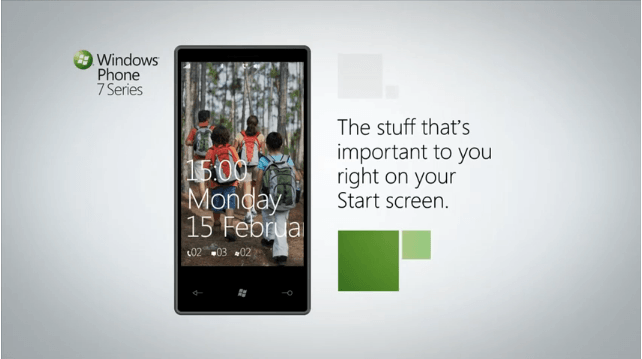
Obviously, Microsoft didn't run through all the stuff they'd already covered back at Mobile World Congress when Windows Phone 7 was announced, so here's the rest of the story.
• A new piece of hardware showed its face today. (Above.) This time it's from Samsung. Externally, it's indistinguishable from the Omnia HD. Internally, you can assume it falls inline with Microsoft's minimum requirements for Windows Phone 7.
6 Ways to Make that New Smartphone Actually Smart
3:49 AM

How to Make that New Smartphone Actually Smart
1. Getting Started

Out of the box, most smartphones aren't all that smart. In fact, many can be downright idiotic. Prepping your new pocket ‘puter means some hand-holding, which also means slogging through a checklist of occasionally tedious (but necessary) steps. Don't worry, we're here to help. Remember, this device will be your constant companion for the next year or two. So you'll want to start the relationship off right.
2. Pre-charging Tip

Regardless of the specific smartphone you received for the holidays, the weakest link is likely its battery. Treating your Li-ion with respect will not only extend the life and usefulness of your new phone, but also boost its resale value—just in case you decide to dump to back on the market prematurely. Lucky for you, almost all the major manufacturers offer guidance here, including Palm, Apple, and BlackBerry. What they won't tell you, however, is that you must resist the urge to immediately charge your smartphone. Yup, let that 30-60 percent charge go down to zero before plugging in. Juicing up your smartphone in its half-charged state will make the battery components settle faster. That, in turn, will mean it won't be able to re-charge as efficiently in the future. Ideally, you should always wait for the battery to drain before recharging to maintain good health, but the occasional slip won't matter much. If you really want to understand these fickle little bricks, check out our Giz explains feature on why batteries die.
3. Moving Your Data
a. Contacts

Why no one has figured out how to make this process easier is beyond us. Anyhow, here are a few options for shuffling all your contacts to your new handset:
- The easiest way is to simply have your carrier to do it. This option is particularly useful if you're upgrading on the same carrier. Stop by your local retail store and a service rep should be able to transfer them in a minute or two. Beware: If you're switching carriers, there may be a small fee associated with the contacts relocation. Be sure to ask.
- If you have a GSM phone, you can also use its SIM card to make the transfer. These days almost every phone (smart or dumb) will have an option to ‘write all contacts' to a SIM card. After you've done this, simply remove your old card and slide it into your new phone. Be sure to transfer all your contacts from the old SIM onto your new phone's memory, as you'll be taking the old SIM out again. This, of course, won't work for CDMA (SIM-less) carriers. Sorry, Verizon and Sprint customers.
- You can also use Google Sync and a protocol called SyncML to make the transfer. Google Sync supports quite a few smartphones, including the iPhone, as well as ones from Nokia, Windows, and BlackBerry. Once it pulls all your old contacts into your Google account, you can go back to the cloud and make it rain contacts.

Depending the phone, e-mail can either be a tremendous pain in the ass or a breeze. You're first step is, again, consulting the manufacturers: Most, like Apple, Google, Palm and Microsoft, offer quick setup guides. Note that depending on the service provider and phone, Exchange and Gmail setups will be completely different. Here's a good rule of thumb to keep in mind during the process: use IMAP (not POP). This will keep your messages and their read/unread statuses in sync with your desktop clients. Because most of your e-mail downloading will be still be happening over 3G for now, you'll also want to set some limits. A 10 kb cap for individual message sizes is best. This can help boost the speed of your incoming messages.
Calendars
Google Calendar users have it the easiest—particularly if they're using a new Android phone. By default, your calendars will automatically sync with your phone. The Pre 2 will do this too, while the iPhone needs to be configured with CalDav.
4. Media and Syncing
A smartphone isn't designed to be a solitary device. You'll need to check in with home base (a desktop or laptop) now and again. That means you'll be dealing with a cadre of desktop software to transfer personal info, music, videos and photos. If you're a MobileMe customer, Apple takes care of syncing bookmarks, calendars, contacts for you over the air. Still, you'll need to download iTunes to use and active your phone. For BlackBerry users, you can download the BlackBerry Desktop Manager. Windows phone 6.5 and 7 users are best served by Windows Device Center. And if you're against using official software, Android and Palm phones (as well as Windows phones, iPhone and BlackBerrys) all play nice with doubleTwist, a cross-platform music player/media syncing app.
Converting Video
Your 32GBs are crying for content. But you can't just copy all those torrented videos over to your smartphone. First you'll need to encode them with something like Handbrake. You're aiming for converting those files to 320x240 h.264 here. Most new smartphones will be able to play that back without a hitch.
5. Apps? Apps. Apps!

They can make or break a smartphone. So where do you go to find the essentials? There's no better place than Giz. But before diving into the downloads, we recommend you familiarize yourself with the affiliated app stores. Here's our comprehensive list and their respective advantages and disadvantages. Okay, now onto the apps!
iPhone
Your first stop should be Gizmodo's Essential iPhone Apps Directory. It's a compendium of the best of the best, and everything else you need to make your iPhone into a mobile powerhouse. If you'd rather not pay for apps, we got you covered too. Check out our Essential Free Apps. Just be careful. Those free versions seem to be stealing your personal info without asking. We also do regular posts and weekly roundups, so be sure to check them out too.
Android
Snag the Nexus S? You'll want to hit up our 10 Best Android Apps roundup. Keep yours eyes peeled for our monthly roundups too for the latest additions to the store.
BlackBerry
Here, we defer to the specialists: CrackBerry not only does regular reviews, they even have their own app store. In many ways, it's even better than BlackBerry's official shop, which isn't really saying much.
Palm
Palm doesn't exactly have a thriving app store. While it's a little dated, you can go through our Essential PalmOS roundup. Beyond that, PreCentral's official app reviews are fairly fantastic. Also worth checking out is their extensive homebrew app gallery, which has about as many decent apps in it as the official catalog.
Windows Phone 7
First, peep our roundup of Windows Phone 7 Apps. Next, check out our list of seven essential apps. Done.
OS Tricks and Tips
Whether you're coming to your smartphone's operating system fresh or are a seasoned veteran, here are a few tips for getting the most out of your new device.
iOS
Double-tap quick app switching, killing background apps, fiddling with the wallpaper—our pals at Lifehacker cover them all.
Android
Gingerbread is here, y'all. Check out Google's Senior VP of Product Management, Jonathan Rosenberg's list of tips. They're good.
WebOS
PreCentral has a nice basic list of WebOS tricks. And if you just snagged the Pre 2, check out Palm's own site.
Windows Phone 7
Head over to Microsoft's site for the basics.
Blackberry
You can either head over the BlackBerry's official tips and tricks site, or read through TechRadar's comprehensive list.
6. The Accessories

No smartphone is perfect. And frankly, it's easy to go overboard on accessories that make up for those inevitable faults. Resist that urge. Remember, you'll only be dumping more money into a device that you're ditching in two years (maybe less). That said, there are definitely some worthwhile investments you can make. Here's our list:
A Case
Yes, they can ruin the cut of your smartphone's jib. But even with Gorilla Glass, liquid metal and all those other fancy materials, your new smartphone is heartbreakingly fragile. Put simply: You're going to want a case. You can go crazy if you want, but there's no need to spend much. Here's our list of sub-$5 cases that'll get the job done. The main thing to make sure of is that your device's corners are covered. It's the edge impacts that typically shatter the glass. We'll remind you here of the same thing we did last year: You're now stuck in a multi-thousand dollar contract with this one device, which itself costs hundreds of dollars to replace. So yeah, be careful.
Headphones
If your phone wasn't your primary music player before, it is now. Step one: Throw out the headphones or headset it came with. Seriously, none of them are good. We love Bowers & Wilkins P5s if you want to pamper your ears a bit. If you'd rather go with something more discrete (and cheap), you can't beat a pair of Shures either. Just remember, a decent pair of earphones will cost you 100 bones or more—with the exception of maybe the MC5s. It'll be worth it as long as your digital music collection is up to the task.
Storage
Most smartphones either come with internal or "expandable storage. If yours falls into the latter category, it likely means it's got an empty microSD slot somewhere. Rule of thumb: If your phone comes with less than 2GB of space and has said slot, you need to fill it. Go ahead and grab at least an 8GB microSD card. They can be found online for well under $20.
Cables
Picking up a spare charging cable for your phone is never a bad idea. For most smartphones this is a simple mini/microUSB cable. For iPhones, it's an iPod dock connector. Trust us, you will lose them, and having a backup can be a life saving on road trips and in the office.


